July 2026
Volume 19 Issue 9

US Digital Accessibility: Laws, Resources, and Real-World Insights (Recorded)
Celebrating 36 Years of the ADA and 35 Years of the ADA National Network (Recorded)
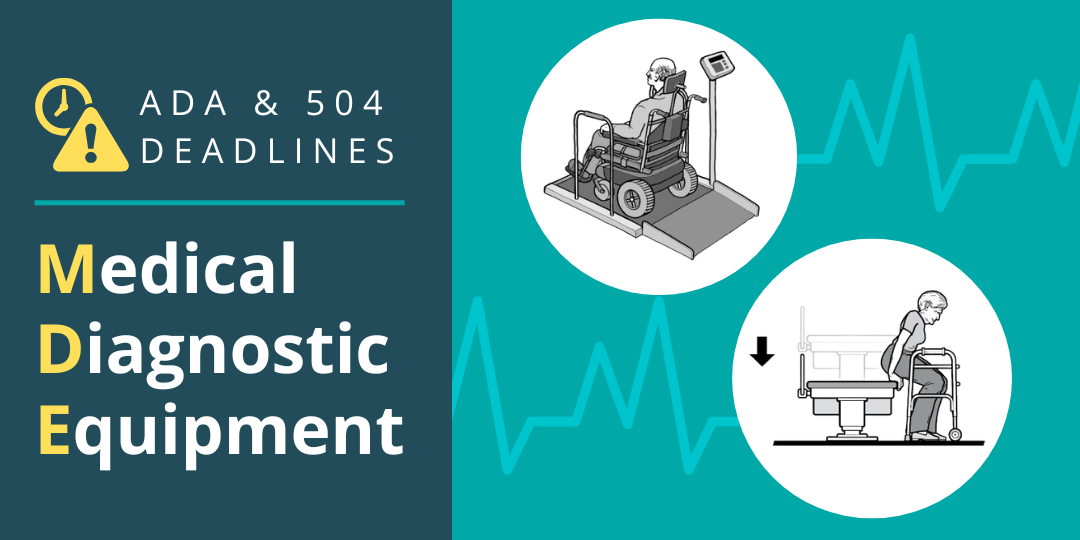
In 2024, Title II of the ADA received an update with new regulations for medical diagnostic equipment (MDE) as well as new accessible MDE technical standards. Next month, state and local government entities have an important deadline to meet under this new rule. As of August 9th, 2026, state or local government entities that use examination tables and weight scales are required to have at least one of each that meets the new MDE standards. However, this is not the only important deadline or requirement to keep in mind.
MDE Requirements Under Title II of the ADA:
While Title II of the ADA only applies to state and local government entities that utilize MDE, you may have seen another deadline for July 8, 2026. This is the deadline for entities subject to the federal Rehabilitation Act which applies to healthcare providers receiving federal financial assistance (Medicaid, CHIP, Medicare, etc.). On May 1st 2024, the U.S. Department of Health and Human Services (HHS) Office for Civil Rights (OCR) finalized a rule that prohibits discrimination on the basis of disability in federally funded healthcare settings. These updates also included new Section 504 requirements for accessible MDE. Questions about the new Section 504 requirements for MDE should be directed to the HHS Office for Civil Rights.
DOJ Statement on the Enforcement of the ADA Integration Mandate
On July 20th, the U.S. Department of Justice issued a notice stating that guidance on Olmstead was not enforceable and that they plan to revisit the Olmstead Guidance to determine if it is consistent with the single best meaning of the statutory text. Previously in June, the U.S. Department of Justice issued a “slip opinion” which claimed that neither the ADA nor Section 504 of the Rehabilitation Act require states to serve people with disabilities in the most integrated setting appropriate. This news comes as 100 lawmakers urge DOJ to retract their opinion which they argue “undermines decades of protections for disability rights.”

Senate Committee Moves to Reverse Dismantling of Federal Education Department
The Senate education committee advanced a bill to keep oversight of K-12 and services for students with disabilities at the U.S. Department of Education instead of moving them to Health and Human Services. A separate amendment to reverse relocating the Office for Civil Rights to the Department of Justice was also suggested, but it did not pass the committee. The legislation still needs to pass the full Senate. Learn more about the Senate education committee’s bill on changes to the U.S. Department of Education.

ACLU Case: Bans on Health Programs for People Using Illegal Drugs Violates the ADA
Syringe Service Programs (SSPs) provide access to health services for people with substance use disorders. However, some local governments are banning SSP programs in a move that ACLU argues violates the ADA. While the ADA generally does not cover individuals who are currently using illegal drugs, there is an important exception for health services or services connected to drug rehabilitation. Learn more about the ACLU case arguing that targeting health services designed for people with substance use disorder violates the ADA.

New Law Creates Disability Advocacy and Guardianship Agency
House Bill 862 was signed into law creating the Illinois Department of Disability Advocacy and Guardianship (IDAG) which is scheduled to officially begin operations on July 1, 2027. The new agency will elevate the work of the Illinois Guardianship and Advocacy Commission by transforming it into a cabinet-level department within state government. The legislation also establishes a new Advisory Council made up of leaders from across Illinois who will provide guidance and input on the department's mission and priorities.
Bipartisan Push to Renew ASAP Program for Accessible Transit
A bipartisan piece of legislation would renew the All Stations Accessibility Program (ASAP) which is set to expire September 30. Because of ASAP, Illinois received $185 million in funding for Chicago Transit Authority and Metra projects to build ramps, install elevators and make other accessibility improvements to the region’s public bus and rail system. Building on this progress, the bill would reauthorize the first-ever grant program dedicated to improving accessibility at public transit stations, including elevator installations, ramps and accessible wayfinding, among other upgrades that make travel easier for Americans.
Learn more: Duckworth, McCormick Lead Bipartisan Push to Renew ASAP Program Helping Make Transit Accessible for All
The Arc of Indiana is Giving Disabled Hoosiers Self-Advocacy Skills
The Arc of Indiana received a grant that will help Hoosiers with disabilities get the tools and skills to advocate for themselves and their needs. According to CEO Kim Dodson, it is important that people with disabilities are at the table with lawmakers. She says that over the past few years, people with disabilities have gotten to the table, but they might not know how to engage at the table. Dodson says that the grant will go towards monthly virtual sessions that will teach self-advocacy skills to Hoosiers with disabilities.
Learn more: Hoosiers with disabilities to benefit from new grant
Autism Caregivers Now Eligible for Disability Parking Placard
Hoosier parents and caregivers for those with autism are now eligible to receive a disability parking placard. Officials with the Indiana Bureau of Motor Vehicles say helping people with autism in busy parking lots can be difficult and potentially unsafe. Governor Mike Braun says having access to closer parking will reduce risks. To apply, the child or adult you’re caring for must have level two or three autism spectrum disorder, where they require substantial or very substantial support. Eligible caregivers can apply by completing an Application for a Disability License Plate or Parking Placard.
Learn more: Disability parking placard now eligible for autism caregivers in Indiana
New Special Education Plan to Inform Future Policy and Supports
Michigan’s Department of Education (MDE) released plans to improve outcomes for students with disabilities. Department leaders shared data earlier this month that showed students who receive special education services have greater academic success when they spend more time in general education environments. According to MDE, four-year graduation rates for students with disabilities in Michigan increased by 5% over the last 10 years. MDE plans to work closely with local school districts to improve access to special education services. The committee will travel to school districts to evaluate statewide needs, identify effective practices, and collect input from stakeholders to inform future statewide policies and support systems.
Learn more: Michigan Department of Education unveils new plan to support students with disabilities
Airport Launches Navigation App for Travelers with Disabilities
The Gerald R. Ford International Airport Authority celebrated the launch of a partnership with GoodMaps, a navigation app designed to enhance access for travelers with disabilities. The smartphone app provides turn-by-turn directions through audio instructions, augmented reality visuals and haptic feedback to enhance accessibility and independence for all travelers, including people who are blind, have low vision, are deaf or hard of hearing, have mobility challenges or other accessibility needs.
Learn more: Grand Rapids airport launches navigation app for travelers with disabilities
Providers and Clients Sue MN Department of Human Services (DHS)
A new lawsuit accuses Minnesota human services leaders of dismantling an in-home disability care program that families and providers say more than 3,000 people rely on. Providers and clients in the Family Residential Services (FRS) program met at Eagan High School for a town hall with state lawmakers about ongoing provider closures. They said the Minnesota DHS did not listen to their concerns and is now being sued.
Learn more: Minnesota disability services provider group, clients take DHS to court
Three Rivers Park District Helps People with Disabilities Explore Outdoors
This summer, Three Rivers is rolling out an expansive lineup of adapted programs and specialized gear including single-session evening and weekend events where trained instructors help you adapt a specific sport to your body and comfort level. Additionally, Three Rivers has adaptive lake kayaking sessions and other independent and ongoing activities.
Learn more: The Tabakas and Three Rivers Park District are helping people explore the outdoors this summer
Proposed Amtrak Route Could Widen Access Across the State
A proposed Amtrak route linking Cleveland, Columbus, Dayton and Cincinnati could give Ohioans whose disabilities prevent them from driving another way to reach jobs, medical care, family and other destinations across the state. But accessible trains alone would not guarantee an accessible trip. Station locations, platform designs, staffing, schedules and connections with local transportation remain undecided. Those choices would help determine whether riders could complete their journeys independently. The proposed route, known as 3C+D, is still in the federal planning process. The Federal Railroad Administration’s most recent status report, dated March 31, lists $500,000 for the corridor’s initial planning step but no federal funding for the next two steps.
Learn more: Proposed Amtrak route could expand travel options for Ohioans with disabilities
Bill that Would Have Created Added Burden to Vote by Mail Vetoed
Disability Rights Ohio and many other organizations called on advocates to reach out to Governor DeWine on House Bill (HB) 472. This legislation created additional barriers to people who use absentee ballots to vote, disproportionately impacting the disability and aging communities. On Wednesday, June 24, 2026, Governor DeWine vetoed this bill stating that HB 472 “would create an additional and significant burden for Ohioans who vote by mail.”
Learn more: Your Voice Heard - Governor Vetoes HB 472
New Self-Advocacy Forms for Housing and Education Needs
Disability Rights Wisconsin now has new form letters for housing and education issues. These form letters will guide individuals through the steps of requesting accommodations for access at home or at school. Topics include things like asking for an accessible parking space, asking your child’s school for a reasonable accommodation, and more!
Learn more: Self-Advocacy: New Form Letters for Housing and Education Needs
nteragency Partnership Shows Progress for Workers with Disabilities
Wisconsin’s ongoing commitment to competitive integrated employment (CIE) for individuals with disabilities continues to produce positive outcomes, according to the newly released 2026 Joint CIE Report. The annual report provides data on workers with disabilities who receive services from a combination of the Department of Workforce Development’s (DWD) Division of Vocational Rehabilitation (DVR), Department of Health Services (DHS), and the Department of Public Instruction (DPI).
Celebrating the ADA and ADA National Network Anniversary!
July 26, 2026 marks the 36th Anniversary of the signing of the Americans with Disabilities Act (ADA). This year, we are also celebrating the 35th Anniversary of the Great Lakes ADA Center as a member of the ADA National Network. Check out our ADA Anniversary page for materials to enhance your own ADA36 celebrations and information on upcoming events.
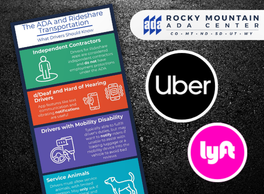
Rocky Mountain ADA Center: Driving for Uber or Lift? What you should know about the ADA
Did you know that the ADA employment protections do not apply to independent contractors? The Rocky Mountain ADA Center explains this and other important information for rideshare drivers in their new resource. Check out the Rocky Mountain ADA Center’s resource on driving for a rideshare company.

Know Before You Go: Accessibility Tips for Travelers
Wherever you are planning to travel, taking a few practical steps ahead of time can make it easier to navigate airports, hotels, and ground transportation. This summer, check out the helpful guide from Disability Belongs on travel accessiblity.

Answer: While the ADA does not protect against discrimination based on current illegal drug use, it does protect against discrimination based on a history or record of illegal drug use. It also protects against the denial of health services, including prescribed medication connected to drug rehabilitation, like Suboxone or Methadone, on the basis of current illegal drug use.
The ADA is clear that covered entities may not use current illegal drug use as justification to deny health services, or services provided in connection with drug rehabilitation, if the individual is otherwise entitled to such services. For example, a person in custody at a jail should generally not be denied access to prescribed medication, based on current illegal drug use, that they would otherwise be entitled to receive.
There is an exception for drug rehabilitation or treatment programs which the ADA states may deny participation to people who engage in illegal use of drugs while they are in the program.
Resource(s):
Learn more by visiting our ADA Frequently Asked Questions.

According to the lawsuit, Alight Solutions refused an employee additional breaks during his shift to monitor blood sugar and to recover from diabetic episodes, even though he was willing to make up the time by working a longer shift. Among other things, Alight used electronic attendance monitoring systems to track employee activity that did not appropriately account for the employee’s additional breaks. Instead of accommodating the breaks, Alight terminated him.
According to the suit, the franchisees had a policy which refused to provide reasonable accommodations to employees who had actual or perceived medical restrictions. Instead, the franchisees placed employees on unpaid, indefinite leave, even if the restrictions did not prevent them from performing the essential functions of their jobs. This practice, sometimes known as a “100% healed” policy, often resulted in forced resignation or discharge of employees who could not provide a doctor’s note stating they had no restrictions. Additionally, two of the franchisees unlawfully commingled employees’ medical records with personnel files. In addition to paying $250,000 monetary damages, the four-year consent decree requires the franchisees to eliminate the requirement for employees to have no medical restrictions, individually assess and provide reasonable accommodations, and annually train employees on the ADA.
EEOC v. O’Reilly Auto Enterprise, LLC
According to the lawsuit, O’Reilly hired an employee as a commercial truck driver in 2015. In the summer of 2022, he had a stroke and multiple seizures and was hospitalized in an intensive care unit. The employee was on an approved leave of absence until February 2023. Towards the end of his leave, after he was advised that he could not drive a commercial vehicle for five years, he requested a reasonable accommodation in the form of reassignment to a non-driving position at an O’Reilly’s distribution center. Although he qualified for multiple open and available positions, O’Reilly refused to offer him one of the positions pursuant to a policy which prohibited drivers from being reassigned to distribution centers. Instead, O’Reilly terminated him.
EEOC v. Golding Barge Line, Inc.
According to the lawsuit, the company rescinded a job offer for an individual who applied for work as a deckhand because of the results of the applicant’s pre-employment color vision test. The agency alleged that the company rescinded the offer despite the fact that color vision was not an essential function of the position.
EEOC v. Red Royal Electric, Inc.
According to the suit, Red Royal refused to hire an applicant with a neurodevelopmental disorder and failed to accommodate his request to provide documentation of prescription medication to pass the employer’s drug screen for hiring. Under the three-year consent decree, Red Royal will pay $34,500 in back pay and compensatory damages to the job applicant and implement significant policy and training reforms.
EEOC v. Penney OpCo, LLC (JC Penney)
According to the suit, a warehouse associate at a JC Penney logistics center was diagnosed with breast cancer and requested time off for medical appointments. She submitted the required written accommodation request, medical documentation of her treatment and need for leave from work to the company’s third-party benefits administrator; however, JC Penney denied her request. Because her request was denied, the time she took off from work for her cancer treatment counted against JC Penney’s attendance points policy, and when she exceeded the number of points allowed, she was fired. The approved consent decree settling the suit requires JC Penney to pay $99,000 monetary relief and undertake remedial measures to include instituting and training its managers on a new process for monitoring how its third-party leave administrator handles requests for accommodation under the ADA and a review procedure before discharging employees who may have disability accommodation requests pending.
EEOC v. Federal Express Corporation
The suit charged that Federal Express Corporation discriminated against four individual employees who worked as package handlers, and a class of employee package handlers, who are disabled because of blindness, by failing to provide them with reasonable accommodations which would allow them to perform the essential functions of their jobs and enjoy equal benefits and privileges of employment. The suit also said Federal Express Corporation failed to maintain records, in violation of federal law.
According to the suit, in October 2024, a case worker with Hodgkin’s lymphoma provided The Salvation Army with a medical note stating her chemotherapy treatments would continue through February 2025 and asking for intermittent leave for the treatments and related recovery. Instead, The Salvation Army told the employee it needed to let her go. She was presented with two options: resign and be eligible for reemployment when she was healthy or be fired and no longer eligible for reemployment with The Salvation Army. The employee, who wanted to continue her employment with The Salvation Army, was forced to resign.

Cline v. West Los Angeles College
Under the settlement, the Los Angeles Community College District and West Los Angeles College, will provide an on-campus shuttle service at Wes Los Angeles College. The shuttle is for people who have disabilities that make it difficult to navigate long distances, inclines, or uneven terrain, and who attend or would like to attend on-campus classes or events. The Court has scheduled a hearing for July 20, 2026, at 10:00 a.m. to determine if the proposed Settlement Agreement is fair and reasonable and should receive final approval. Learn more: Cline v. West Los Angeles College - Disability Rights Advocates

Access Living of Metropolitan Chicago Inc. v. City of Chicago
The City of Chicago agreed to settle a 2018 lawsuit that alleged the city failed to comply with the ADA, the Rehabilitation Act and the Fair Housing Act and build affordable housing accessible to Chicagoans with disabilities by paying $2.25 million. The agreement also calls for the city to build or rehabilitate 2,000 new affordable units accessible to those with limited mobility as well as an additional 840 new affordable units accessible for Chicagoans with limited hearing and sight during the next 12 years. The city will also have to create a system to inspect, monitor and maintain a list of affordable and accessible units as part of the resolution of the lawsuit. Learn more: Access Living of Metropolitan Chicago v. City of Chicago: Relman Colfax PLLC.
M.F. v. New York City Department of Education (DOE)
This 2018 lawsuit alleged that DOE and other New York city agencies systemically failed to ensure that students with diabetes could attend school safely and have access to the same educational opportunities as their peers under the ADA and Section 504 of the Rehabilitation Act. The monitor for this case issued their first Compliance Report evaluating DOE’s compliance with the settlement agreement for the period from September 1, 2025, to January 1,2026. The Monitor found that although DOE is making targeted, systemic improvements that will benefit students with diabetes, the pace is not keeping up with many of the Agreement’s requirements. At the Monitor’s request, Defendants will submit targeted corrective action plans within 30 days to address noncompliance in three categories: timeliness with finalizing Section 504 plans before the end of the prior school year for returning students with diabetes, the new student pre-meeting requirement, and unmet training benchmarks.

DOJ v. Kamran Azad MD P.A., d/b/a Azad Plastic Surgery (APS)
The U.S. Attorney’s Office opened an investigation into APS after receiving a complaint from an individual alleging APS refused to provide him with plastic surgery services because he has Human Immunodeficiency Virus (HIV). During the investigation, a second complaint was received from an individual alleging APS refused to provide her with plastic surgery services because she has Crohn’s disease. The U.S. determined that APS relied on incorrect assumptions and stereotypes about HIV and Crohn’s disease, not on current medical knowledge, when deciding to deny the complainants access to its services which violates the ADA. Under the terms of the settlement agreement, APS must pay $20,000 in compensatory damages to each complainant and undertake remedial measures including providing training to all personnel on the non-discrimination requirements under the ADA and providing plastic surgery services for patients with HIV.

The settlement will resolve a lawsuit brought by three Bay Area residents against the companies that own and operate SuperShuttle—a transportation service that provides ground transportation serving over 70 airports nationwide, including in San Francisco, Los Angeles, New York, Atlanta, and Chicago – for failing to provide services to wheelchair users. Learn more: Settlement with Leading Airport Transportation Shuttle Company to Improve Access for Wheelchair Users - Disability Rights Advocates