April 2026
Volume 19 Issue 6

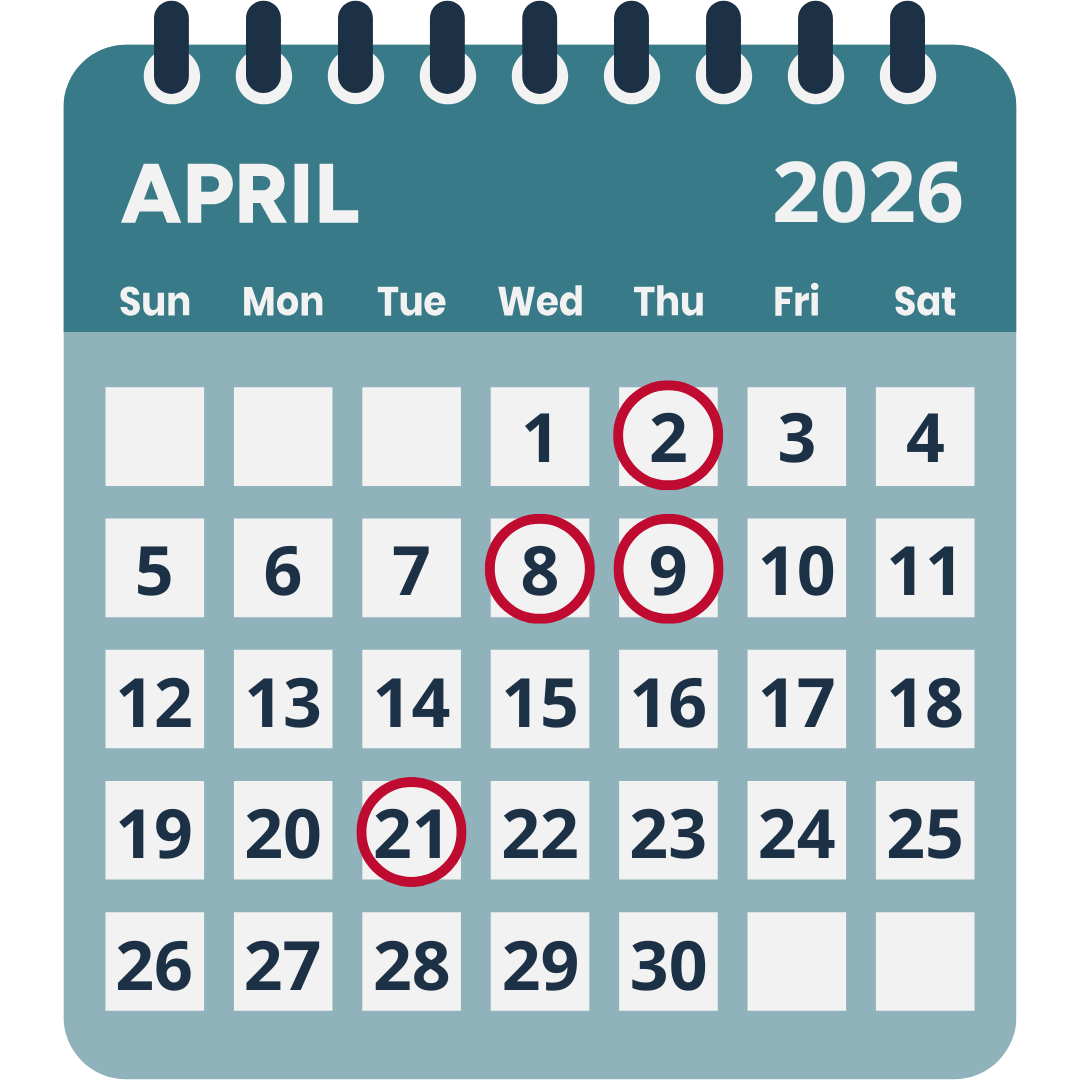
Connecting Corners: Curb Ramps, Blended Transitions, Accessibility and PROWAG Basics (Recorded)
Ask an ADA Professional RE: Remote Work Accommodations (Recorded)
Verbal Description Basics – Applications & Approaches (Recorded)
Supporting Pregnant People with Disabilities: The APAP Intervention (Recorded)

"Going forward, I’d like to see the disabled community represented in leadership—both in government and in the private sector—and at all levels… Their perspective needs to be included in the broader conversation."
- Peter Berg
Recently, staff from the Great Lakes ADA Center attended a Celebration of Life ceremony for Peter Berg, a friend and former member of the Center who passed away on the morning of April 6, 2026. Peter was a Technical Assistance Coordinator with the Center for over 20 years. He left on April 8, 2022 to join the Office of Access and Equity at the University of Illinois Chicago (UIC) as the new ADA Coordinator. Peter was a valued member of the Great Lakes ADA Center, UIC, and the many communities and organizations he served over the years.
Peter was recognized as one of the leading experts on the ADA within the ADA National Network and was highly respected by federal agency liaisons who work with Technical Assistance staff nationwide. He was the second formal ADA Coordinator in UIC's history and was honored by UIC with the Award of Merit for his contributions to the Chancellor's Committee on the Status of Persons with Disabilities, where he served as both a member and Chairperson for several years.
As a screen reader user, Peter was regularly asked to review various forms of information technology and provide feedback on accessibility for individuals using assistive technology. He also challenged UIC on numerous occasions as the campus worked to keep pace with its obligations to ensure equal access.
Peter was tapped by leadership within the Chicago Mayor's Office for Persons with Disabilities to serve on numerous committees. While serving, he helped address the accessibility of taxi and rideshare services in Chicago and the installation of audible pedestrian signals to improve the safety of crosswalks for people who are blind or have low vision. He also served on the task force that prepared regulations updating the Illinois Accessibility Code to align with the most recent ADA Standards for Accessible Design. Additionally, alongside his accessibility work in Chicago, Peter was a passionate baseball fan and helped train Major League Baseball teams, including his favorite, the Chicago Cubs.
Peter had many "fans" within our service region who regularly called and emailed him for guidance when facing difficult situations involving employees, students, or customers. Numerous architects, engineers, and code officials frequently reached out to run ideas by him when they needed help interpreting ADA Standards or resolving complex design questions. Research into the Center's outcomes for technical assistance activities even identified a "Peter factor," closely associated with high customer satisfaction and positive outcomes.
Peter was also frequently interviewed and featured in various media outlets for his expertise in disability rights and accessibility, such as:
We were fortunate to have the opportunity to work and learn alongside him. He was not only a valued colleague but also a mentor and a source of inspiration to many. His contributions to the disability community have left a lasting impact, and his legacy will continue to shape the path forward.

DOL: Web Content and Mobile App Compliance Deadlines Extended
An Interim Final Rule (IFR) issued by the Department of Justice (DOJ) on April 20, 2026 will extend web content and mobile application compliance deadlines by one year. The DOJ invites public comment on all aspects of this rule by June 22, 2026. Learn more about this rule.

Defining Disability Under the ADA: Exploring Federal Court Trends
This article from the American Bar Association (ABA) highlights an interview with a law school professor who reviewed every federal court decision issued between 2019 and 2023 that addressed the definition of disability under the ADA. Learn more about the recent trends in federal court decisions involving the ADA definition of disability.

Proposed Legislation to Establish Guardianship Bill of Rights for Veterans with Disabilities
A proposed bill would create a council to develop a Guardianship Bill of Rights to protect the civil rights of people being considered for protective arrangements. The standards would include protective arrangements such as supportive decision making and a Protection and Advocacy Program for oversight and monitoring. Learn more about the proposed law to establish a Guardianship Bill of Rights.

Bill Targets Zoning Laws That Block Homes for Adults with Disabilities
Local zoning rules can create barriers for organizations seeking to provide Community integrated living arrangements (CILAs). CILAs are state-regulated residential settings where adults with intellectual and developmental disabilities can live together in small group homes with on-site staff support. House Bill 1843 would bar municipalities from using zoning mandates to block CILAs and would explicitly state that local zoning boards can’t circumvent the Fair Housing Act and the Americans with Disabilities Act or other applicable state laws.
Learn more: Bill Targets Zoning Laws That Block Homes for Adults with Disabilities
Auto Insurance Reform Bill Clears Illinois House
Illinois Secretary of State’ Driving Change campaign – launched to combat unfair and discriminatory auto insurance practices – is now delivering results, as legislation advancing insurance reforms has passed the Illinois House and will return to the Senate for a vote. Senate Bill 1486 would elevate concerns from Illinois drivers, including those with disabilities, and shape a comprehensive proposal to bring greater fairness, transparency and accountability to insurance ratemaking.
Learn more: Giannoulias Auto Insurance Reform Bill Clears Illinois House
New Bill Aims to Address ‘Asset Trap’ For Residents with Disabilities
Senate Bill 3008 would require the state of Illinois to provide information about financial independence resources for people receiving disability services. The bill focuses on the Senator Scott Bennett ABLE Program. ABLE accounts allow people with disabilities to save and invest up to $100,000 for qualified expenses — such as transportation, education and assistive technology — without losing eligibility for state benefits. Despite the program’s potential to provide a safety net, State Sen. Faraci says the biggest hurdle remains awareness.
Learn more: New Bill Aims to Address ‘Asset Trap’ For Residents with Disabilities
Track Chairs to Increase Access to Nature at Every Indiana State Park
Visitors to Indiana State Parks with limited mobility will soon have access to track chairs to help them get outside and explore trails. Purchase of 45 track chairs was made possible by $1 million in funding from Lilly Endowment Inc. The track chairs will be distributed statewide for use at each Indiana State Park and Indiana State Park Inn. This investment makes Indiana the current national leader in the availability of track chairs at state parks, with a greater number of chairs than any other state park system in the country.
Learn more:
GCPD Accepting Public Comment on 5-Year State Plan
The Indiana Governor’s Council for People with Disabilities (GCPD) is now accepting Public Comment on its next Five-Year State Plan. Public comment is open until May 28, 2026. Learn more about some of the work GCPD has done so far toward the new state plan by visiting their Future State Plan Page.
Learn more: GCPD Accepting Public Comment on 5-Year State Plan
Muskegon’s Best Kept Secret: A Hub for Inclusive Winter Sports
“The goal is to make Muskegon Luge Adventure Sports Park accessible in as many ways as possible to as many people as possible”, says Bill Bailey, a lodge manager at the park. Over the past several years, the park has worked with organizations to expand adaptive recreation and their adaptive equipment. Each season, the park hosts a free accessibility open house where families can try activities using adaptive equipment and trained staff. The park continues expanding its offerings beyond winter sports, adding attractions that include a dual zip line, a 38-foot climbing wall, summer luge, and archery.
Learn more: Muskegon’s Best Kept Secret: A Hub for Inclusive Winter Sports
New Report Shows Worsening Barriers to Accessible Voting
A new report published by Detroit Disability Power documents just how often there are barriers at the voting booth, and why it keeps getting worse. 1 in 4 Americans has a disability. In Michigan, that number is nearly 1 in 3. Yet this new report finds only 10% of the polling places assessed in 2025 were fully accessible. That’s down from 13% in the previous report covering the 2024 elections and 16% in the report covering the 2022 elections.
Learn more: New Report Shows Many Barriers to Accessible Voting
Push to Scrap MN DHS Disability Services Program and Start Over
State lawmakers advanced a proposal to replace a Minnesota disability support services program after growing fraud concerns. An amendment to an existing bill introduced in the House Human Services Finance and Policy Committee would eventually end Integrated Community Supports (ICS) and replace it with a new program.
Learn more: Push to Scrap MN DHS Disability Services Program and Start Over
MN Lawmakers Seek Reversal of Approved Special Education Cuts
A 2025 law mandating a $250 million cut to special education is prompting bipartisan pushback at the Minnesota Capitol, as school districts warn of widespread negative impacts. Last year, the Legislature passed a law establishing a Blue Ribbon Commission, tasking it with finding $250 million in special education cuts by October 2026, with reductions set to take effect in July 2027. The commission says it needs more time to complete its work. But the law states the cuts are mandatory, regardless of whether specific reductions are identified. A bill authored by Rep. Ben Bakeberg would give the commission more time and eliminate the automatic funding cut.
Learn more: A Year After Approving Special Education Cuts, Some MN Lawmakers Seek Reversal
Public Safety Duty Disability Bill Could Extend Paid Health Insurance
SF 4464 would require continued health insurance coverage until age 65 for peace officers and firefighters receiving duty disability benefits. Current law, enacted in 2025, limits that benefit to 60 months unless the disability is based solely on a psychological condition. The bill would apply retroactively to May 24, 2025, the effective date of the 2025 law.
Learn more: Public Safety Duty Disability Bill Could Extend Employer-Paid Health Insurance
Disability Rights Ohio Seeking Input on FY 2027 Objectives
Every year, Disability Rights Ohio (DRO) gathers public input from Ohioans with disabilities, advocates, allies, and partner organizations to better understand the issues and barriers being faced in their communities. This information is used to help inform and shape DRO’s work in the year ahead. DROs 2027 Goals and Objectives Survey is open now through Friday, May 29th.
Learn more: Disability Rights Ohio Seeking Input on FY 2027 Objectives
Bill to Improve Enforcement of Accessible Parking Violations
On Feb. 24, House Bill 712 was introduced and would increase the maximum penalty for improperly using an accessible parking space, expand what counts as a violation and make it easier for law enforcement to issue fines. The bill would shift most accessible-parking violations from criminal offenses to civil violations and establish a tiered penalty system based on prior offenses.
Learn more: Ohio Bill Aims to Improve Enforcement of Accessible Parking Violations
The Milwaukee Bucks are Making Basketball More Accessible
The Milwaukee Bucks and Ticketmaster have partnered with OneCourt to bring OneCourt’s tactile broadcast devices to Fiserv Forum. The tablet-sized devices use vibrations and audio to help blind and low vision fans experience Bucks games through touch.
Learn more: Milwaukee Bucks are Making Basketball More Accessible
New Great Lakes ADA Center Blog: Does My Business Need an Elevator?
Under the ADA, having an accessible way to get from point A to B is a must, but what happens when you start to add basements, multiple stories, and mezzanines? Read our new blog to learn how Title III of the ADA applies to businesses and vertical access.
Accessible Instructional Materials in K-12 Education
The National Center on Accessible Educational Materials works with schools to provide accessible materials and technologies for learners with disabilities. Under the Individuals with Disabilities Education Act (IDEA), the National Instructional Materials Access Center (NIMAC) provides an online repository of source files for K-12 instructional materials. These can be used to provide accessible formats like braille, large print and digital text.
Home Modification Resource
eople across the country are investing in accessible home modifications that allow for greater independence and aging in place. To assist with this, the AARP of Illinois and other partners developed a guide on Accessible and Universal Home Remodeling.
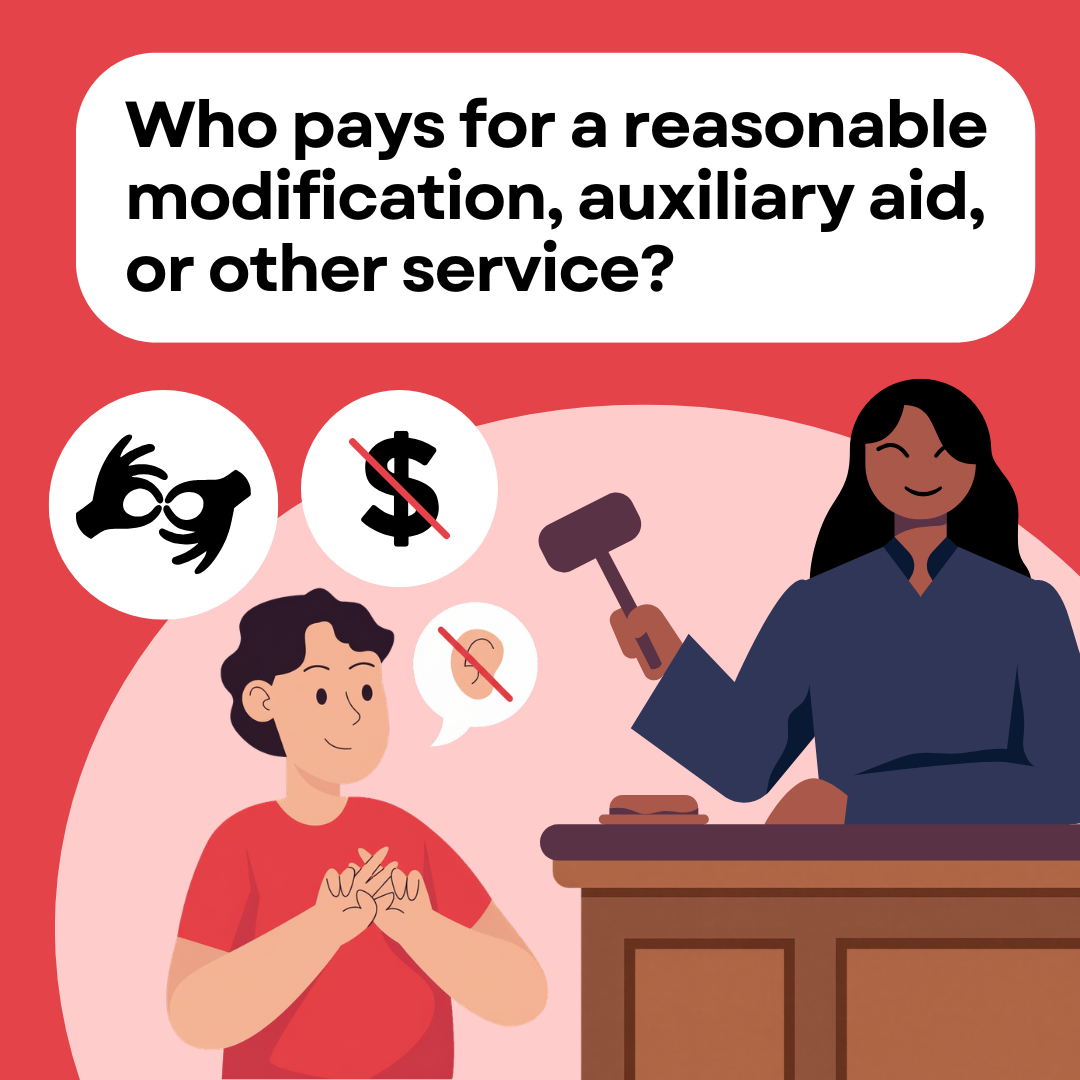
Answer: ADA Titles II and III prohibit surcharges on people with disabilities to cover the cost of accessibility measures needed for equal access. This means that state and local governments as well as private entities like businesses and nonprofits covered by the ADA are responsible for the cost of these measures, absent an undue financial or administrative burden.
In some instances, the entity may be able to secure outside funding assistance or tax credits to help cover the cost of providing the modification, aid or service. However, on its own, lack of reimbursement or outside funding is not a sufficient reason to deny a request. In situations where the requested modification, aid or service would result in an undue burden, the entity must consider reasonable alternatives that would meet the disability-related need and allow for equal access.
Resource(s):
Learn more by visiting our ADA Frequently Asked Questions.

EEOC v. Schneider National, Inc.
This federal lawsuit charges a Wisconsin-headquartered national transportation and logistics company with denying a service dog as a job accommodation and withdrawing a job offer for a candidate with Post Traumatic Stress Disorder (PTSD).
EEOC v. Diamond Jim’s and Mrs. Donna’s Ole Farm Beef LLC
According to the lawsuit, an employee disclosed her condition to the restaurant and told the employer that she had not had a seizure in years. The suit stated that she had a seizure months after she began work and the restaurant fired her shortly after learning of her seizure, telling her that she should focus on her health.
EEOC v. ALM Freight, LLC and LMDmax Corp.
ALM Freight and their employment agency, LMDmax, have agreed to settle a federal lawsuit alleging they refused to provide a sign language interpreter and revoked a job offer. According to the suit, a deaf applicant accepted a driver position with ALM and worked with LMDmax to complete the onboarding process. When she requested an American Sign Language interpreter for her first day of orientation, LMDmax responded with a text message stating that ALM does not provide interpreters and would not proceed with her hiring. ALM knew of the request and approved their response.
EEOC v. Roundy’s Supermarkets, Inc.
According to the suit, when a nursing mother continued her requests for an accommodation under the Pregnant Workers Fairness Act, the company insisted she sign a release authorizing the company to access her private medical records. EEOC asserted that demanding access to the employee’s medical records without job-related justification is a violation under the ADA. Even though normal pregnancy is not considered a disability, the ADA limits unlawful medical questions and exams which could elicit disability-related information.
According to the suit, when the Indianapolis-based residential services provider learned of an applicant’s deafness during an interview for a housekeeping position, the company told him it could not accommodate his disability and rejected him. Additionally, Damar’s interview questions included prohibited medical inquires, and its qualification standards required applicants to hear and see within normal ranges and communicate verbally without considering reasonable accommodations.
This federal lawsuit charges that the grocery store terminated an employee with neuropathy after denying access to a previously settled accommodation. According to the suit, new management failed to interact with the employee to determine if the previously granted accommodation was reasonable or if another was potentially available. Instead, management told her to seek leave – which she did not want or need – until she could return to work without an accommodation. The employee was terminated by Kroger when she could not support a need for leave with medical documentation.
EEOC v. St. Vincent Hospital d/b/a Christus St. Vincent Regional Medical Center
According to the lawsuit, a long-term employee of CSV fractured her foot and tore tendons in her ankle. After returning from medical leave and working light duty in a patient care position for months, the employee requested reassignment as a reasonable accommodation for her disability. Although a vacant receptionist position existed which would have allowed the employer to perform with her restrictions, CSV did not reassign her. Instead, CSV fired the employee and stated in its termination letter that she would not be eligible for rehire until she was “fully recovered†or had “a release for full duty.â€
EEOC v. Unnamed Technology Company
This conciliation agreement resolves class action claims against an unnamed technology company alleging discriminatory denial of COVID-19 vaccine exemptions. In its investigation, the EEOC found reasonable cause to believe that the company discriminated against a class of employees on the basis of religion and disability by denying their COVID-19 vaccine exemption requests and terminating employees who declined to receive vaccines.
DOJ v. New York City Housing Authority (NYCHA)
The U.S. Attorney’s Office for the Eastern District of New York announced a settlement agreement with NYCHA to resolve allegations from tenants and housing applicants that they failed to provide qualified interpreters upon request. The suit alleged that NYCHA required deaf and hard of hearing individuals to provide their own interpreters, some of which were minors, and also alleged that they did not provide deaf or hard of hearing individuals with appropriate auxiliary aids and services, such as visual doorbells and fire alarms.
DOJ v. SeaWorld and other subsidiaries under United Parks & Resorts Inc. (UPR)
DOJ and the U.S. Attorney’s Office for the Middle District of Florida filed a lawsuit under the ADA against UPR citing a policy which bans guests with disabilities from using wheeled walkers with seats, including rollators. The suit alleges that this policy violates the ADA and also alleges that UPR imposes surcharges on guests with disabilities.
DOJ v. Counter Productions Inc.
DOJ reached a settlement agreement with Counter Productions to resolve allegations that their staff refused to make reasonable modifications for a member of the Sioux Falls Children’s Choir. An individual required the use of a wheelchair to be able to sing along with her friends as part of a special concert. However, the company claimed that the concert staging area was too hazardous to permit her participation, despite various options proposed by venue staff, members of the choir, and the parents.